When to Resole Climbing Shoes: 5 Signs

Your shoes felt solid on that crimp-heavy route last month, but now your toe slips off the same hold. Before you toss them in a closet (or worse, the trash), check the rubber.

Replacing the worn rubber sole on your climbing shoe, i.e., resoling them, can bring them back to life. Resole too late and the repair costs more or becomes impossible. You need to catch wear early.

But what does early wear actually look like?

How to Spot the Wear

a healthy looking climbing shoe
A healthy looking climbing shoe with minimal wear

The rubber around your toe and the ball of your foot wears down fastest. That’s where to look first.

Kick your shoes off and check them after your next session. The difference between a cheap resole and an expensive repair often comes down to a few climbing days.

Wear StageWhat You See or FeelWhat to Do
Stage 1:
Sole edge receding
The sole edge near the toe has pulled back, forming a curved shape, but you can’t see the rand yetBest time to resole. Cheapest fix. Shoe looks almost new after.
Stage 2:
Rubber worn thin
Smooth, shiny patches on the sole. Rubber feels soft or spongy (less than 1mm thick). You slip on smears you used to stick.Resole soon: the thinner it gets, the closer you are to rand damage.
Stage 3:
Rand showing through
You can see or feel a ridge where the rand (the thin rubber strip wrapping around the sides and toe of the shoe, acting as a structural layer) meets the sole. The rand rubber is visible at the toe.Resole now. You’re climbing on the rand, which isn’t designed for it. Waiting means costlier rand repairs.
Stage 4:
Rubber delaminating
Rubber is peeling away from the shoe at the toe or sole edges.Resole immediately: the bond is failing and more climbing will accelerate the damage.
Stage 5:
Hole in the sole
There’s a hole through the rubber, especially at the big toe.You’ve waited too long for a simple resole. Rand repair is now needed, adding $15–$25 extra and possibly changing the fit.

Most climbers don’t notice wear until Stage 2 or 3. If you can catch it at Stage 1, you’ll save the most money and get the cleanest result.

Sign 1: Rubber Edge Pulling Away from the Toe

On a new shoe, there’s a clear seam where the sole meets the rand. As you climb, that line gradually recedes from the toe tip, forming a curved shape. When you can see a gap between the sole edge and the rand near the toe, you’re at the earliest warning sign.

Pick up both shoes and compare them side by side. Your dominant foot almost always wears faster. If one shoe’s sole line has pulled back noticeably more, that’s your confirmation.

What It Feels Like on the Wall

A rounded toe edge means a loss of precision on small holds. You might not slip yet, but you’ll feel less confident placing your toe on tiny edges. The shoe feels slightly “off” without an obvious reason.

This is the sweet spot for a resole. As Resole.d, a climbing shoe resoler based in Manila, puts it: “This is actually the best time to resole. The edge line is gradually receding, forming a curved shape. Resoling now saves money since no additional repairs are needed yet. The finish will look very good — sometimes almost brand new.”

Sign 2: Smooth, Shiny Patches Where Rubber Used to Grip

Run your thumb across the sole under your big toe. Fresh rubber has a matte texture with tiny ridges. Worn rubber looks shiny, almost polished. Those slick patches mean the rubber has lost the surface friction that helps you stick to rock.

On the wall, you’ll feel the difference on smears (where you press the flat of your shoe against a featureless surface for friction) first. Footholds you used to trust now feel uncertain. Excess pain when pressing into footholds can signal that the sole has worn dangerously thin, with less than 1mm of rubber left between your foot and the rock.

Habits like dragging your toes on the wall or fidgeting on holds will speed this up. If you’re seeing shiny patches after just a few months, it’s worth cleaning up your footwork alongside scheduling a resole.

Sign 3: The Rand Is Showing Through

On a healthy shoe, the sole rubber covers the rand completely. When you can see the rand peeking through at the toe, or feel a ridge where sole rubber meets rand rubber, your sole is nearly gone.

At this stage, you’re climbing on rubber that wasn’t designed for contact with rock. Performance drops sharply because the rand is thinner and less sticky than sole rubber.

Resole.d warns: “At this point, the climber is effectively climbing on the rand rubber, which it is not designed for. Toe caps and rand patches cost more, and no matter how skilled the resoler, it will not look the same after rand repairs. The longer you wait, the more you pay.”

Don’t wait for a hole. Stage 3 is your last chance for a clean, affordable resole.

Sign 4: Rubber Peeling Away from the Shoe

Peeling at the toe or along the sole edges means the bond between the rubber and the shoe material underneath is failing. You might notice a flap of rubber lifting when you flex the shoe, or see a visible gap where the sole separates from the upper.

This isn’t just cosmetic. Every session with peeling rubber lets dirt and moisture into the gap. The damage accelerates fast once it starts. If you spot peeling, stop climbing in them and send them for a resole before the separation spreads.

Sign 5: Visible or Feelable Hole in the Rubber

A hole through the rubber (usually at the big toe) means you’ve passed the window for a simple resole. At this point, the resoler can’t just replace the sole. They’ll also need to repair the rand, which adds $15 to $25 in cost and may slightly change the shoe’s fit and stiffness around the toe.

You’ll feel it before you see it. A cold spot on your big toe, a sharp poke from the rock, or a sudden wet feeling on a damp route. These are unmistakable. The repair is still possible, but it won’t be cheap, and the shoe won’t feel exactly the same. That’s the honest trade-off of waiting too long.

Should You Resole or Buy New Climbing Shoes?

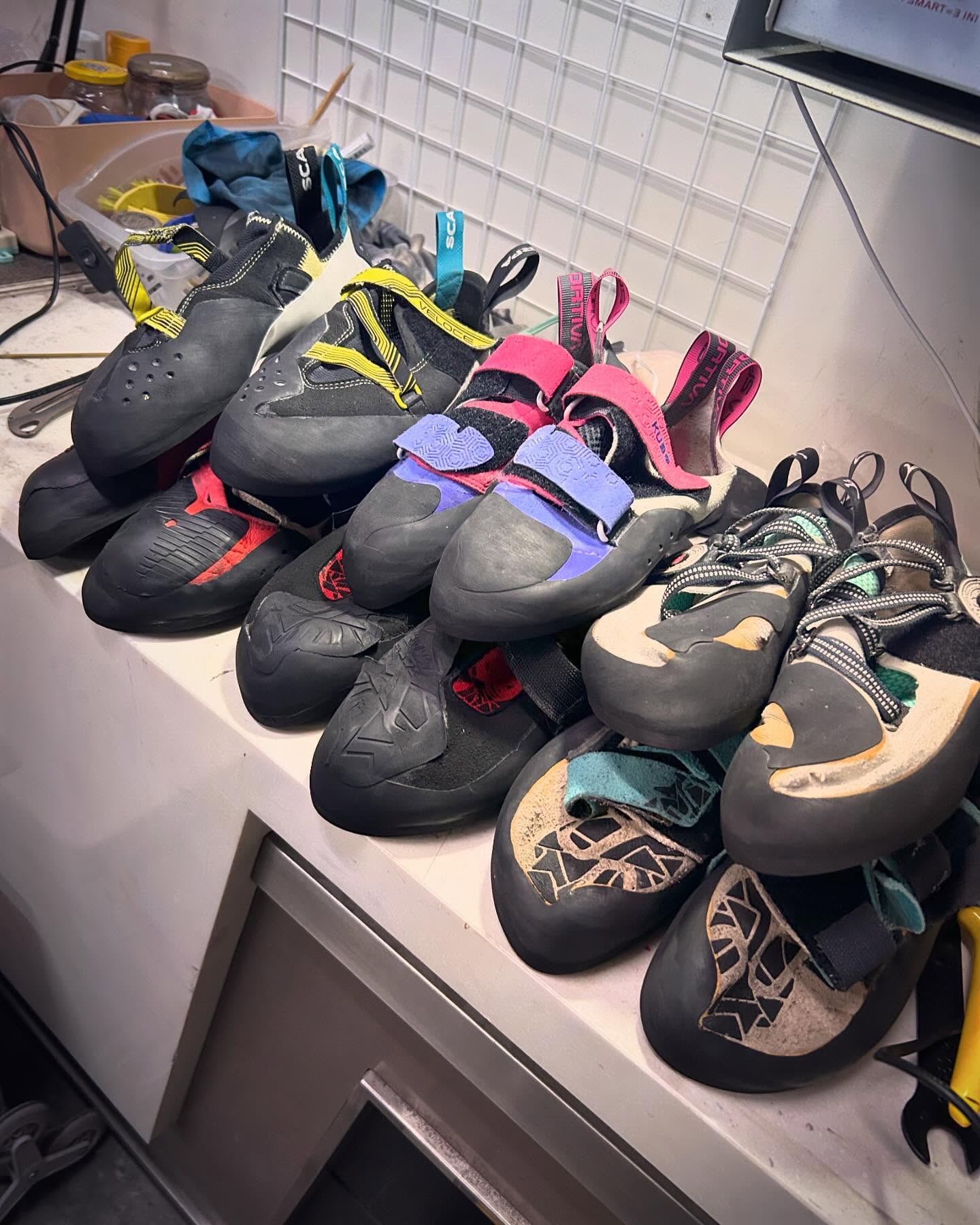
A batch of freshly resoled shoes by @resole.d

Resoling makes sense when the shoe still fits well and the upper (the fabric or leather part wrapping your foot) hasn’t broken down. A half resole typically runs $25–$35, while new climbing shoes cost $100–$200 or more. That math alone makes resoling appealing.

But cost savings don’t matter if the shoe is falling apart in places new rubber can’t fix. “Worth resoling if the shoe can still return to its original shape and appearance, the midsole and footbed are not compromised, and the shoe’s function can still be restored for long-term use,” according to Resole.d.

OptionProsConsBest For
Resole (half resole)Costs $25–$35. Keeps a broken-in shoe you love. Can choose different rubber (softer for smears, harder for edges). Can be done 2–3 times per pair.Takes 2–6 weeks turnaround. Not worth it if upper or rand is badly damaged. Fit may change slightly after rand repair.Shoes still in good shape with intact uppers. You love the fit. Wear is caught early (Stages 1–3).
Resole (full resole + rand repair)Saves the shoe even after a hole forms. Still cheaper than new shoes at $40–$55+.Costs more than a simple resole. May change fit and stiffness around the toe. Appearance won’t match original.Shoes with holes or significant rand damage that you still want to save.
Buy new shoesPerfect fit and fresh rubber. Chance to switch to a shoe that better matches your current climbing style.Costs $100–$200+. New break-in period. Old shoes go to waste.Upper is blown out. Shoe has been resoled 2–3 times already. Rand damage is too severe. Shoe no longer fits your climbing style.

When Buying New Is the Smarter Move

A shoe that isn’tworth saving

Sometimes the shoe has simply run its course. Buy new instead of resoling when:

  • The upper has holes, tears, or stretched-out elastic that no longer holds your foot snug.
  • You’ve already resoled the pair two or three times and the rubber sole isn’t bonding well anymore.
  • Rand damage is so severe that repair will change the toe’s shape and stiffness.
  • Your climbing style has shifted (say, from gym bouldering to outdoor slab), and you need a different climbing shoe shape.
  • The shoe doesn’t fit your foot properly anymore, whether from overly tight shoe fit stretching or from your preferences changing.
Fresh resole by @resole.d

As Resole.d puts it: “Technically it can be fixed, but the cost may be too high, the process too long, the quality uncertain, and the final appearance will be different.” A fresh shoe with perfect fit will outperform a zombie resole every time.

What to Know Before Sending Shoes for a Resole

DetailWhat to Expect
Half resole cost$25–$35
Full resole cost$35–$55
Rand repair (add-on)+$15–$25
Turnaround time2–6 weeks
Max resoles per pair2–3 times before performance declines
Rubber optionsSofter rubber for better grip on smears. Harder rubber for durability on edges.
In-store resoling (e.g., REI)REI doesn’t resole in-house. Most climbers ship directly to a dedicated climbing shoe resoler.

“Don’t leave shoes in hot places,” Resole.d warns. “Heat activates and degrades the glue.” Clean dirt off the soles between sessions, let them air-dry away from heat, and store them flat.

If you only own one pair, plan ahead so you’re not shoeless for a month.

Make Each Resole Last Longer

Your footwork habits matter as much as the rubber itself. “Strengthen your core and improve footwork,” Resole.d advises. “Proper technique reduces foot dragging, which is a major cause of rubber wear.” Placing your feet precisely instead of scraping them across the wall keeps rubber intact longer.

Between sessions, brush chalk and grit off the soles. Store your shoes in a cool, dry spot (never a hot car trunk). These small habits can stretch a resole’s life by months. If you’re breaking in a freshly resoled pair, ease into harder climbs rather than jumping on your project right away. And if you climb in aggressive downturned shoes, check the toe area after every session, since the downturn concentrates wear in a small zone.

Check Your Shoes Tonight and Catch Wear at Stage One

The difference between a $35 resole and a $60 rand repair comes down to one thing: how early you spot the wear. Flip your climbing shoes over after your next session. Look at the rubber edge near the toe and match what you see to the five signs in this post. If the sole line is already pulling back, that’s your cue to send them in before the damage gets expensive.

Frequently Asked Questions

Can You Resole Climbing Shoes with a Hole?

Yes, but the repair goes beyond a standard resole. A hole through the rubber (especially at the big toe) means the rand needs patching too. That typically adds $15–$25 to the total cost. That extra work can slightly change the shoe’s fit and stiffness around the toe.

One resoler put it bluntly: “Retire if the footbed or leather inside is cracked, even if the outside still looks okay.” If the interior is still solid, the repair is usually worth it. If not, you’re paying more for a shoe that won’t feel right anyway.

Does REI Resole Climbing Shoes?

REI doesn’t resole shoes in-house. Some locations may help you ship your pair to a third-party resoler, but most climbers skip the middleman. Sending directly to a dedicated climbing shoe resoler usually means faster turnaround and clearer communication about rubber options.

Can You Resole Climbing Shoes Yourself?

DIY resole kits exist, but they’re best for small patches rather than full resoles. Getting an even rubber bond across the entire sole requires specialized tools and experience. A poor bond or uneven rubber thickness will hurt your precision on edges (where you stand on small footholds with the edge of the shoe) and could ruin the shoe permanently.

The $30–$50 for a half resole is cheap insurance compared to replacing a $150 shoe you accidentally wrecked. For broader climbing gear decisions, the same logic applies: match the fix to the problem.

When Is the Best Time to Resole Climbing Shoes?

Stage 1 is ideal, when the sole edge near the toe starts pulling back. Earlier means cheaper, cleaner results.

What Does Worn-Out Climbing Shoe Rubber Look Like?

Look for shiny, polished patches under your big toe. That smooth surface means the rubber has lost its grip.

What Is the Rand, and Why Does It Matter?

The rand is the thin rubber wrapping around the shoe’s sides and toe. It’s structural, not meant for climbing contact.

How Long Does a Resole Take?

Expect two to six weeks, depending on the resoler’s workload and how long shipping takes each direction.

How Many Times Can You Resole the Same Pair?

Most shoes handle two to three resoles before the shoe material underneath stops bonding well with new rubber.

Is Resoling Always Better Than Buying New Shoes?

Not always. If the upper is torn or stretched out, new shoes are the smarter call.

What Causes Climbing Shoes to Wear Out Faster?

Foot dragging on the wall is the main culprit. Precise footwork keeps rubber intact significantly longer between resoles.

How Should You Store Climbing Shoes to Make Rubber Last Longer?

Keep them in a cool, dry spot. Heat degrades the glue. Never leave shoes in a hot car.