
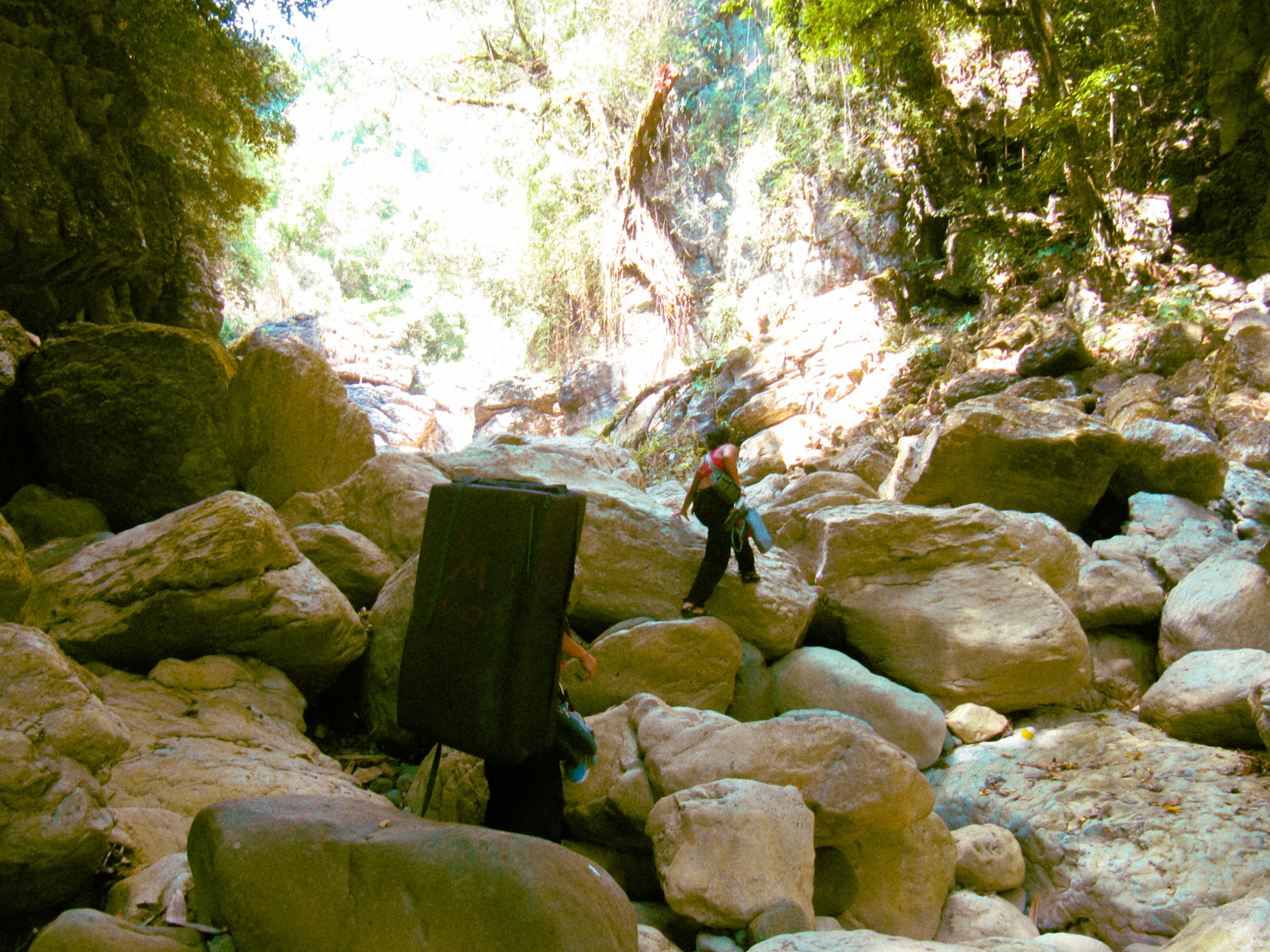

Climbing combines strength, movement skill, focused problem-solving, and shared challenges. Here’s how those benefits develop for adults and children, plus what the research can tell us.
Key takeaways
- Climbing trains pulling strength, grip, core tension, and coordinated leg movement, but the exact fitness gains depend on how often and how hard you climb.
- Every route asks you to plan, test, remember, and adjust movement. That makes climbing mentally engaging without proving broad gains in memory or intelligence.
- Climbing can create easy openings for conversation and shared problem-solving, while children can practice balance, movement planning, and persistence in age-appropriate sessions.
- Research on supervised therapeutic climbing is promising, but an ordinary gym session isn’t a treatment for depression or another mental health condition.
What climbing can actually offer
A climbing session gives your hands, feet, attention, and judgment the same job: find a workable path up the wall. That mix is why the sport can feel more absorbing than a standard set-and-rep workout. You’re exercising while solving a movement problem.
The benefits depend on the session. Easy top-rope laps, hard bouldering attempts, and an outdoor day have different demands, and time spent resting between climbs changes the training load. Climbing also has a learning curve, so better climbing technique can make you more efficient before your muscles become much stronger.
Climbing is a form of physical activity that many people enjoy enough to repeat. The World Health Organization links regular physical activity with broad physical and mental health benefits, although those findings apply to activity in general rather than climbing alone.
Strength grows alongside movement skill
Climbing spreads the work across the body, but each area contributes in a different way.
| Area | What it does on the wall | What you may notice |
|---|---|---|
| Hands and forearms | Hold grips and regulate how hard you squeeze. | More grip endurance on familiar hold types. |
| Back, arms, and shoulders | Pull, stabilize, and keep the upper body connected to the wall. | Better pulling strength and control. |
| Core | Transfers force between your hands and feet while limiting unwanted swinging. | More body tension on steep or stretched positions. |
| Hips and legs | Push from footholds, shift weight, and create reach without relying only on the arms. | More precise footwork, balance, and movement efficiency. |
A 2018 review and meta-analysis of college students reported improvements in measures such as handgrip strength, pull-ups, push-ups, and vertical jump after climbing programs. The studies were small and focused on a narrow population, so they don’t promise the same result for every recreational climber.
Climbing can support an athletic build, but physique is shaped by training history, food, sleep, genetics, and the style of climbing you do. If body composition is your goal, look at your overall activity and habits over time.

Routes give your attention somewhere concrete to go
A route is a sequence of decisions made under physical pressure. That process usually looks like this:
Read the route
Identify possible handholds and footholds, then estimate where the hardest section may be. Climbing grades describe difficulty, but the same grade can feel very different across styles. Our climbing grades guide explains the main systems.
Try a sequence
Use one plan, notice where balance or reach breaks down, and pay attention to the position that caused the problem.
Adjust the movement
Change a foot, turn a hip, alter your pace, or choose another hold. Small changes often save more energy than pulling harder.
Remember what worked
On another attempt, repeat the useful parts while staying ready to revise the sequence again.
This loop gives climbing its puzzle-like quality. It practices attention, movement planning, and recall within a specific task, though that doesn’t prove climbing produces a large general boost in working memory or decision-making.
Some climbers also find that watching the next hold quiets the rest of the day for a while. That experience is real without needing to label every session mindfulness or flow. Your attention may still wander, especially when the gym is busy or a move feels intimidating.
The mental health evidence needs careful reading
Climbing may support well-being as an enjoyable activity, yet the strongest depression research studied structured therapy programs rather than casual climbing.
What the trial tested
A randomized trial of 156 outpatients compared a 10-week group bouldering psychotherapy program with group cognitive behavioral therapy. The climbing program was manualized, therapist-led, and combined movement with psychotherapeutic exercises.
What the result means
Both groups improved, and the researchers found bouldering psychotherapy was not inferior to the comparison therapy within their predefined margins. That result supports further use and study of this specific clinical program.
What it doesn’t mean
The trial doesn’t show that a regular bouldering session treats depression. A systematic review of therapeutic climbing also found promising physical results while describing gaps in the strength of evidence for mental and social outcomes.
Climbing can sit alongside professional care when it suits the person, but it shouldn’t replace care prescribed by a qualified clinician. If low mood, anxiety, or stress is disrupting daily life, speak with a mental health professional or doctor.

Shared problems make conversation easier
Bouldering gyms create natural reasons to talk. Someone may ask how you reached a hold, offer beta (a suggested sequence of moves), or celebrate a move you’ve both been trying. You can join those exchanges without arriving with a partner, although the mood varies by gym, time, and local culture.
Roped climbing adds a formal partnership. The climber and belayer check the system, agree on commands, and stay attentive to each other. New climbers should learn those skills through instruction before treating trust and communication as something the activity teaches automatically. Our lead climbing guide explains how that partnership changes on lead.
For children, climbing offers playful practice in balance, coordination, movement planning, and trying again after an unsuccessful attempt. Keep the claims modest: a few sessions won’t guarantee confidence or resilience. Age-appropriate instruction, close supervision, and a setting that avoids pressure give those skills room to develop.
How to try climbing without overcomplicating it
An indoor gym is the simplest starting point because staff can explain the facility, its rules, and the equipment used there.
| Before you climb | Practical choice |
|---|---|
| Choose a format | Try bouldering at a gym with padded flooring, or book an introductory roped session with instruction. |
| Use suitable equipment | Rent shoes and any required harness before buying. Fit should feel secure without distracting pain. |
| Start below your limit | Pick easy climbs so you can practice using your feet, resting, and stepping down with control. |
| Follow local instruction | Learn the gym’s falling, landing, belaying, and partner-check rules before climbing independently. |
Rental gear is enough for a first visit. If you later want your own footwear, the beginner climbing shoe guide explains fit and shape. Parents comparing footwear can use the children’s climbing shoe guide, while new rope climbers can review the climbing harness guide after taking a class.
Rock climbing benefits FAQ
Is rock climbing a full-body workout?
Yes. Your fingers, forearms, back, arms, core, hips, and legs all contribute, though the workload changes with the wall angle, hold type, route, and your technique.
Can climbing help with weight loss?
Climbing adds physical activity, but no single session or sport guarantees weight loss. Body weight changes reflect activity, food, sleep, health, and other individual factors over time.
Does climbing improve mental health?
It can be enjoyable, social, and absorbing, which may support well-being. Clinical findings on depression come from structured, therapist-led bouldering psychotherapy, so they shouldn’t be applied directly to ordinary gym climbing.
Is climbing good for children?
Climbing can give children practice in balance, coordination, movement planning, and persistence. Choose age-appropriate instruction and supervision, and let progress stay playful rather than tying it to confidence or character promises.
Make the first sessions about movement
Choose easy climbs, notice what your feet are doing, and rest before fatigue makes every attempt look the same. The climbing technique guide gives you a practical next step once the gym feels familiar.
Sources
- World Health Organization: Physical activity
- Li et al.: Effects of Rock Climbing Exercise on Physical Fitness among College Students
- Luttenberger et al.: Bouldering psychotherapy compared with cognitive behavioral therapy
- Gassner et al.: The therapeutic effects of climbing: A systematic review and meta-analysis