
Written and fact checked by

Last reviewed
Most bouldering shoe guides start with a general climbing all-rounder and call it a bouldering shoe. We took a more specific approach. Heel hooking, toe hooking, and power on steep terrain each get their own score. Bouldering puts different demands on a shoe, especially on overhangs and comp holds.
A shoe can feel precise on a tiny rock edge and still skate off a rounded gym volume. The 5 picks below are scored for the terrain boulderers spend time on, from steep plastic indoors to overhung rock outside. As an Amazon Associate, Cliff Culture earns from qualifying purchases through the links below, at no cost to the reader.
Our top bouldering shoe picks
Best Overall: La Sportiva Solution Comp
Best for Gym Bouldering: Scarpa Drago
Best for Heel Hooks: La Sportiva Skwama
Best for Wide Feet: Scarpa Instinct VSR
Best for Steep Projects: Evolv Phantom
Bouldering shoes, rated
Each shoe gets 3 scores: Steep Power, Hook Security, and Fit Confidence. We built those scores from published specs, expert reviews, and owner reports, then weighted them around what matters most on a boulder problem. Use the scores to narrow the field before comparing price.
Best Overall: La Sportiva Solution Comp
 La Sportiva Solution Comp
Cliff Culture rating
93
Steep Power
94
Hook Security
86
Fit Confidence
Downturn
Aggressive
Price
$228.95
Stiffness
Soft
Standout Feature
Full toe rubber
Prices checked 11 Sep 2026
Pros & cons
The Solution Comp is the strongest all-around pick here for steep boulderers who want one shoe for both gym sessions and outdoor rock.
Pros
- Secure toe and heel hooks on steep terrain
- Breaks in quickly and softens after a few days
- Owners report a year of regular use from the rubber
Cons
- Rounded edge feels less secure on tiny holds
- Some wear reported around the fast lacing strap
What we like
The Solution Comp is built around steep plastic and steep rock. Its aggressive downturn keeps the toe engaged, while a full rubber patch over the toe box gives you plenty of surface area for toe hooks. The heel narrows toward the back, which helps on small heel placements. Owners consistently report strong grip on overhung problems.
Fit and adjustability
Sizing is fairly predictable if you already know the original Solution because the two models run similarly. Start around 1 full street size down. The toe box feels long and slightly narrow, while owners describe the heel as narrower, shallower, and less structured than the original Solution. Expect the shoe to feel tight when new.
Durability
For a shoe this soft, the rubber holds up surprisingly well. Owners report that most of the toe rubber can still be intact after a year of regular use. The main durability concern is the fast lacing strap, particularly around its attachment points.
Who can skip it
Slab specialists and climbers spending long days on routes have better options. The aggressive downturn makes flat smearing less natural, and the rounded edge does not bite into tiny footholds as confidently as a stiffer shoe. They are also uncomfortable to walk in, so many climbers take them off between attempts.
As an Amazon Associate, Cliff Culture earns from qualifying purchases at no extra cost to you.
Best for Gym Bouldering: Scarpa Drago
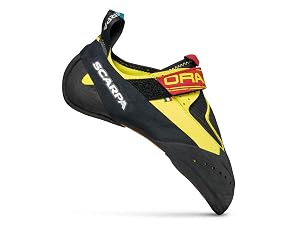 Scarpa Drago
Cliff Culture rating
91
Steep Power
92
Hook Security
78
Fit Confidence
Downturn
Aggressive
Price
$228.95
Stiffness
Soft
Standout Feature
M70 rubber wrap
Prices checked 11 Sep 2026
Pros & cons
The Drago feels most at home on volumes, slopers, and steep gym problems, with the softest build in this group.
Pros
- Wraps around volumes and slopers easily
- Toe hooks feel secure on steep terrain
- Breaks in after only a few wears
Cons
- Soft sole offers limited support on edges
- Can feel baggy under the arch
Fit and adjustability
The supple upper molds around the foot for a close, sock-like feel. The last runs higher through the arch and heel, so some climbers notice extra space after break-in, and stretch stays minimal. Go about half a size down or 1 to 1.5 sizes down for a tighter fit, and Scarpa offers a low-volume version.
What we like
Softness defines the Drago. The sole flexes easily under the toes, letting you curl and squeeze around rounded holds instead of standing on them. Scarpa’s sticky M70 rubber wraps the upper and grips well during toe hooks and smears on gym volumes. Steep, gymnastic climbing is where the shoe feels most natural.
Living with it
That much softness comes with faster wear. The sole typically wears sooner than a stiffer shoe, and long slab pitches can tire your feet because there is little support underneath them. The Drago can be resoled, which gives a worn pair another life before you replace it.
Who can skip it
If your projects revolve around tiny edges, a stiffer shoe will give you more support. The Drago can deform on small footholds, and the mesh upper can bunch or pinch when the strap is pulled tight. Its soft, high-volume shape also makes less sense for cracks and longer outdoor sport routes.
As an Amazon Associate, Cliff Culture earns from qualifying purchases at no extra cost to you.
Best for Heel Hooks: La Sportiva Skwama
 La Sportiva Skwama
Cliff Culture rating
88
Steep Power
91
Hook Security
81
Fit Confidence
Downturn
Aggressive
Price
$218.95
Stiffness
Soft
Standout Feature
S-Heel cup
Prices checked 11 Sep 2026
Pros & cons
The Skwama takes third place, driven largely by an S-Heel cup that feels especially secure on hard heel hooks.
Pros
- S-Heel keeps the heel secure with little dead space
- Soft midsole smears well on rounded gym holds
- Wide toe box works for average and wider feet
Cons
- Leather can stretch close to half a size
- Heel and toe rubber can wear quickly
What we like
The Skwama’s strongest feature is the heel. Its molded S-Heel wraps closely around the back of the foot and can create a secure seal with little dead space. That helps the heel stay planted when you load a hook. A generous rubber patch over the wide toe box also gives toe hooks plenty of grip.
Durability
Soft rubber gives the Skwama its grip, but repeated hooking can wear the heel and toe areas quickly. Resoling can also be more involved than on some other La Sportiva models. A few owners report glue or stitching failures around these high-wear areas.
Fit and adjustability
The leather upper can stretch close to half a size. A common starting point is about half a size below your usual La Sportiva size. The last suits average to wide feet, and the single strap makes the shoe quick to remove. Some owners feel pressure from the ankle rubber at first, easing with use.
Value
The Skwama sits toward the lower end of the high-performance price range. It still gives you a soft, sensitive shoe and a heel that owners praise for hooking. The wider toe box accommodates more foot shapes than many narrow performance lasts. New climbers can get better value from a simpler shoe while they build footwork.
As an Amazon Associate, Cliff Culture earns from qualifying purchases at no extra cost to you.
Best for Wide Feet: Scarpa Instinct VSR
 Scarpa Instinct VSR
Cliff Culture rating
80
Steep Power
90
Hook Security
91
Fit Confidence
Downturn
Moderate
Price
$218.95
Stiffness
Soft
Standout Feature
Split sole
Prices checked 11 Sep 2026
Pros & cons
The Instinct VSR gives broad forefeet more room while keeping a deep heel cup that stays secure on hooks across moderate terrain.
Pros
- Roomy forefoot works well for broad feet
- Deep heel cup stays secure from awkward angles
- Split sole smears well on slabs and volumes
Cons
- Narrow feet can get dead space in the heel
- Soft rubber compresses on small edges
What we like
The VSR uses a moderate downturn, giving it a more versatile feel than the steeper comp-focused shoes in this group. Its soft split sole lets the midfoot flex easily, which helps on smears across slabs and gym volumes. A high rand and dual-texture toe patch add security when you start pulling with the toe.
Living with it
The VSR makes the most sense for gym use. Its 3.5 mm outsole gives you plenty of feel but will usually wear faster than thicker rubber. Scarpa offers resoling through its own service, and the soft rand can gradually relax enough for the downturn to flatten after months of hard use.
Fit and adjustability
The VSR has a roomy fit through both the forefoot and heel. For a performance fit, owners commonly go 1 to 2 sizes below street size. The unlined synthetic upper molds around the foot without stretching much, and the single strap makes the shoe easy to pull off between attempts.
Who can skip it
Narrow feet are more likely to struggle with the fit. Owners with slim heels report dead space after break-in, and the soft rubber can fold more when you load a tiny edge. Crack climbing is also outside the VSR’s strengths, although some climbers find jamming less painful in it than in more aggressive models.
As an Amazon Associate, Cliff Culture earns from qualifying purchases at no extra cost to you.
Best for Steep Projects: Evolv Phantom
 Evolv Phantom
Cliff Culture rating
87
Steep Power
86
Hook Security
71
Fit Confidence
Downturn
Aggressive
Price
$229
Stiffness
Medium
Standout Feature
6-point closure
Prices checked 11 Sep 2026
Pros & cons
The Phantom places fifth and makes the most sense for climbers who want a stiff, aggressive shoe for steep outdoor projects.
Pros
- 6-point closure gives precise fit adjustment
- Trax rubber covers the forefoot for toe hooks
- Vegan synthetic upper with no leather
Cons
- Runs larger than many competing shoes
- Stiff sole gives less feedback on slab
What we like
The Phantom is designed to keep power through the toe on steep terrain. Its plastic midsole is thicker through the forefoot and tapers toward the tip, helping the downturn stay rigid while preserving some feel at the front. Trax SAS rubber wraps most of the forefoot, giving toe hooks a large, grippy contact area.
Fit and adjustability
One strap tensions the shoe from 6 different points, giving you more control over pressure across the foot than a basic single-strap closure. Wear your street shoe size for a more comfortable fit or go about half a size down for performance. A neoprene-like sock lines the inside.
Who can skip it
The Phantom feels most natural on steep terrain. Its stiff build makes slab climbing less sensitive, and the shape can make toe jamming painful in cracks. Climbers who spend most of their time on overhangs are more likely to appreciate what the shoe does well.
Durability
Rubber wrapping around the upper helps the Phantom hold its shape and limits stretch. Trax SAS stays fairly firm after break-in, while the plastic midsole helps preserve the downturn over time. Owner reports are mixed on exactly how much the shoe stretches, with some finding more give than the synthetic upper would suggest.
As an Amazon Associate, Cliff Culture earns from qualifying purchases at no extra cost to you.
How to choose bouldering shoes
Choosing a bouldering shoe gets easier once you know where and how you climb. Start with terrain, then work through downturn, softness, heel fit, and tightness. Each decision removes a few shoes from the shortlist.
-
Decide gym plastic or outdoor rock first
Gym plastic and outdoor rock ask different things from the sole. Soft shoes like the Drago feel at home on rounded volumes and slopers, but that softer rubber tends to wear faster outside. Stiffer shoes like the Phantom hold up better through steep outdoor projects. Start with the terrain you climb most, then compare downturn and price.
-
Pick a downturn that matches your terrain
Downturn changes how a shoe pulls into steep terrain. An aggressive curve, like the Solution Comp or Phantom, keeps the toe engaged on overhangs. A moderate downturn like the Instinct VSR trades some pull for better smearing on slab. Match the curve to your most common wall angle.
-
Match softness to the holds you climb
A soft midsole gives you more feedback through the rubber. Shoes like the Drago and Skwama use that sensitivity to wrap around rounded volumes and slopers. The sole can fold under small edges and hard crimps. If your gym or crag has tiny footholds, a stiffer shoe feels more supportive.
-
Check the heel against your foot shape
Heel fit can make or break a hook. If the cup matches your foot, the heel stays planted when you load it. If there is extra space, your heel can shift inside the shoe and slide off the hold. Press your heel firmly into the cup before buying and check for any gap at the back.
-
Get the tightness right the first time
Bouldering shoes fit tighter than street shoes to keep the foot connected on small edges and hooks. Leave too much space and power gets lost inside. Go too tight and cramping can end a session early. Aim for a snug fit with the heel seated and no dead space.
Feature availability at a glance
The table shows which features come with each shoe. Some are common across performance bouldering shoes, while others solve specific needs, like fitting a narrow foot or avoiding leather. We mark the shoe with the most features, but the count does not affect its score.
Full feature comparison
| Feature | La Sportiva Solution Comp | Scarpa Drago | La Sportiva Skwama | Scarpa Instinct VSR | Evolv Phantom | |
|---|---|---|---|---|---|---|
| Standard features | Aggressive DownturnThe sole curves downward and points the toes toward the hold, helping you keep pressure through the feet on steep and overhung walls. | – | – | – | – | – |
| Asymmetric Toe ShapeThe shoe’s highest point sits over the big toe, concentrating pressure into a smaller area for more precise foot placements. | – | – | – | – | – | |
| Full Toe Rubber PatchRubber extends over the top of the toe box, giving you the friction needed to pull on toe hooks across steep terrain and comp-style holds. | – | – | – | – | – | |
| Molded Heel CupA shaped rubber cup wraps around the heel and helps keep it from shifting when you load a hard heel hook. | – | – | – | – | – | |
| Sticky Rubber OutsoleThe sole uses a soft, high-friction compound such as Vibram XS Grip or a similar brand-specific rubber. That extra grip helps on smears, volumes, and rounded footholds. | – | – | – | – | – | |
| Soft Sensitive MidsoleA thin or partial midsole gives you more feedback through the rubber. That sensitivity can make large volumes and rounded gym holds easier to trust underfoot. | – | – | – | – | – | |
| Velcro Strap ClosureTwo straps let you get the shoe on and off quickly. Boulderers often remove their shoes between attempts, so a fast closure can matter more here than it does on a rope route. | – | – | – | – | – | |
| Slingshot Rand TensionA tensioned rubber rand wraps the heel and pulls the foot toward the toe, transferring pressure into the front of the shoe on overhangs. | – | – | – | – | – | |
| Add-on features | Split Sole ConstructionThe outsole is split into 2 pieces with a gap under the arch, allowing the shoe to flex more freely and wrap around irregular holds. | – | – | – | – | – |
| Edgeless Sole ProfileThe rubber rolls around the toe without a sharp edging, adding contact area for smears and volumes but giving up some bite on tiny edges. | – | – | – | – | – | |
| Low Volume VersionThe brand offers a lower-volume version with less space through the instep and heel, giving narrow feet a closer fit without forcing a smaller size. | – | – | – | – | – | |
| Vegan Upper MaterialsThe upper is made from synthetic material without leather. Synthetic uppers generally stretch less, so the fit tends to stay closer to what you feel on day one. | – | – | – | – | – | |
| Thin Outsole RubberThe outsole measures 3.5 mm or less, compared with the more common 4 mm. Thinner rubber improves feel on plastic but usually wears faster on outdoor rock. | – | – | – | – | – | |
| Feature total | 7out of 13 | 8out of 13 | 7out of 13 | 9out of 13 | 8out of 13 | |
Sizing and fit for bouldering
Sizing varies by as much as 2 sizes across these 5 shoes, so the number on the box only gets you part of the way. Leather uppers tend to stretch more than synthetic ones, which means they often need to start tighter. Brand shape matters too. Two shoes labeled the same size can feel completely different once your foot is inside. Check the upper material and the brand’s fit before deciding how far to size down.
The Solution Comp starts 1 street size down, and the Drago lands 0.5 to 1.5 sizes down with little stretch. For the Skwama, go about half a size down from your La Sportiva size, then add close to another half size for leather stretch. The Phantom runs large, so it fits true to size or half a size down. The Instinct VSR lands 1 to 2 sizes below street size.
How we scored these bouldering shoes
Expert reviews favor soft shoes on gym volumes because a thin midsole can conform to rounded holds. Owner reports tell a different story. Soft rubber wears fast when one pair sees both gym and outdoor use, and narrow feet can end up with dead space in higher-volume heels. That is why Fit Confidence makes up 25 percent of the final score, with Steep Power and Hook Security carrying the rest.
A good bouldering shoe keeps power through the toe on steep terrain and grips well for heel and toe hooks. One useful check is a session on your steepest gym wall to see what fails first. If your heel moves, check heel shape, and if your toes feel weak, check structure and sizing. Our next guide covers how tight climbing shoes need to be for bouldering and roped climbing.
Frequently asked questions
What are the best climbing shoes for bouldering?
The Solution Comp, Drago, Skwama, Instinct VSR, and Phantom are our top picks. We score each one for Steep Power, Hook Security, and Fit Confidence, three factors that matter heavily on overhangs, steep rock, and modern comp-style holds.
Is La Sportiva or Scarpa better?
Both brands have strong options. La Sportiva’s Solution Comp works on steep gym terrain and rock, while the Skwama stands out for heel hooking with its S-Heel cup. Scarpa’s Drago is strong on gym volumes, and the Instinct VSR suits wider feet.
What are the best bouldering shoes for wide feet?
The Instinct VSR is our strongest pick for wide feet. Its broad toe box gives the forefoot room, while the heel cup can sit securely without dead space. Wide-footed owners report a comfortable midfoot and secure fit in the Skwama.
What are the best bouldering shoes for narrow feet?
The Scarpa Drago LV fits narrow feet better with its lower-volume shape. The regular Drago can feel loose under the arch and heel on slimmer feet. The Instinct VSR is roomier at both ends, so narrow feet often notice dead space.
Do bouldering shoes work for sport climbing?
Yes, some bouldering shoes cross over well to sport climbing. The Solution Comp works indoors and outdoors across both disciplines, and owners often describe the Skwama as versatile for sport routes. The Instinct VSR works well on moderate sport climbs on rock.
Our methodology OpenClose
We start with each shoe’s spec sheet, including downturn, rubber compound, and heel rand tension. Expert reviews add context, with Outdoor Gear Lab ranking the Drago highly for steep and gymnastic climbing. Owner reports then check whether that reputation holds up in real-world use.
Steep Power (40%): Steep Power measures tension on overhung terrain. A tight rand, the rubber band that pulls the heel toward the toe, and toe box support help. The Solution Comp and Drago score well. The Instinct VSR loses points for rand flattening.
Hook Security (35%): Hook Security looks at rubber coverage over the toe and heel cup security under load. Thin rubber and a shallow cup are more likely to slip. The Skwama’s S-Heel and the Instinct VSR’s deep cup score near the top.
Fit Confidence (25%): Fit Confidence favors shoes with clear sizing guidance and fewer pressure-point or dead-space reports. Scores drop when a high-volume heel feels loose on narrow feet. Four of the 5 picks have fewer than 80 owner ratings, which limits their weight.

About the author
Luc Gonzales
Luc Gonzales climbs and writes about gear at Cliff Culture. He compares spec sheets, expert reviews, and owner reports for each pick, then checks those patterns against Amazon listing data. He started Cliff Culture to make gear research easier for climbers who want clear recommendations over 20 conflicting reviews.