
Written and fact checked by

Last reviewed
Gym climbing puts different demands on rubber than outdoor rock, so it’s best to have a specific pair that you use indoor. Soft compounds grip painted plastic and volumes well, but they also wear differently from stiffer rubber. This guide weighs both performance and cost.
As an Amazon Associate, Cliff Culture earns from qualifying purchases at no extra cost to you.
Our top gym picks
Best Overall: Scarpa Reflex VS
Best for Volumes and Smears: Scarpa Veloce
Best for Heel Hooks: Scarpa Instinct VSR
Best for Wide Feet: Evolv Defy
Best for Steep Boulders: Scarpa Drago
Indoor climbing shoes, rated
Each shoe gets a score out of 100 based on three weighted metrics: plastic grip, session comfort, and gym value. Higher-scoring shoes grip gym holds well, stay manageable through longer sessions, and make more financial sense compared with repeated rental fees.
Best Overall: Scarpa Reflex VS
 Scarpa Reflex VS
Cliff Culture rating
70
Plastic Grip
93
Session Comfort
88
Gym Value
Downturn
Flat
Price
$98.95
Stiffness
Medium
Standout Feature
Knit upper panel
Prices checked 11 Sep 2026
Pros & cons
This is the value pick for gym climbers who want comfortable, soft rubber without paying performance-shoe prices.
Pros
- Comfortable from the first session with little break-in pain
- Two straps make it quick to remove between attempts
- Soft Vision rubber feels secure on smears and volumes
Cons
- Heel and toe hooks feel loose under hard loading
- Limited support on thin edges and outdoor rock
Grip on plastic
The flat sole and soft Vision rubber give the shoe plenty of contact on smears and larger gym holds. Published reviews describe the traction as strong across a wide range of surfaces. That softness also means less support on thin edges, but most gym climbers will run into fewer of those than outdoor climbers do.
Fit and adjustability
Two hook-and-loop straps make the shoe easy to pull off between attempts. They wrap tension around the arch and help keep the foot secure without a complicated closure. The round toe box works for a range of foot shapes, and owners commonly report a comfortable first session.
Rent or buy
With rentals running around $5 to $7 per visit, this shoe has an easy value argument. It is the least expensive pair in the group. Owners report scuffing on the Vision rubber after about 3 months, and the sole does not become noticeably thin. The knit upper remains intact through regular use.
Reasons to pass
Hard heel hooks expose the biggest weakness. Owners report some movement when the shoe is loaded aggressively, and the flat profile also offers limited support on tiny edges. Those drawbacks matter more outside than they do in a typical gym session.
As an Amazon Associate, Cliff Culture earns from qualifying purchases at no extra cost to you.
Best for Volumes and Smears: Scarpa Veloce
 Scarpa Veloce
Cliff Culture rating
87
Plastic Grip
80
Session Comfort
68
Gym Value
Downturn
Moderate
Price
$158.95
Stiffness
Soft
Standout Feature
Split sole
Prices checked 11 Sep 2026
Pros & cons
Gym boulderers who live on volumes and slopers get the softest smearing platform in the group, with faster rubber wear as the trade-off.
Pros
- Wraps around volumes easily
- Roomy toe box stays comfortable through long sessions
- Single strap makes on and off quick
Cons
- Soft rubber wears quickly with sloppy footwork
- Heel feels less supportive on hard hooks
What we like
A split sole and 1 mm midsole make the forefoot flexible. The shoe wraps around large volumes rather than balancing on top of them. The S-72 rubber compound grips painted plastic well, and the shoe feels especially secure on smears and rounded holds.
Living with it
The single Velcro strap makes the shoe easy to remove between attempts, although some owners find the strap longer than necessary. Reports on upper stretch are mixed, with some climbers noticing a little give while others find the fit stays fairly consistent. The extra toe box room helps during longer sessions.
Durability
The soft rubber that makes this shoe so flexible also wears faster. Reviews note quicker wear when footwork is sloppy, and rough outdoor rock speeds that process up further. The pair can be resoled, and some owners have done so more than once.
Where it falls short
The heel is softer than climbers who rely on aggressive heel hooks want. The rounded toe also feels less precise in pockets and small footholds. It costs more than the budget shoes in this list, so the extra money makes the most sense for climbers who specifically want its softness.
As an Amazon Associate, Cliff Culture earns from qualifying purchases at no extra cost to you.
Best for Heel Hooks: Scarpa Instinct VSR
 Scarpa Instinct VSR
Cliff Culture rating
90
Plastic Grip
77
Session Comfort
62
Gym Value
Downturn
Moderate
Price
$218.95
Stiffness
Soft
Standout Feature
Bi-tension rand
Prices checked 11 Sep 2026
Pros & cons
This is the premium pick for climbers who want a soft shoe that still edges reasonably well and gives them a secure heel.
Pros
- Heel stays secure on hooks across volumes
- Flexible forefoot smears without losing all edging support
- Sticky toe patch feels secure on toe hooks
Cons
- Narrow heels can develop dead space
- Thin outsole wears faster than thicker rubber
Grip and hooks
A 1 mm Flexan midsole and split sole keep the forefoot flexible enough to smear across volumes. Vibram XS Grip2 gives the shoe a soft, sticky feel, while the deep heel cup stays secure during hard heel hooks. The toe patch also provides plenty of rubber for steep toe hooks.
Fit and sizing
The VSR runs roomy through both the forefoot and heel, which suits broader feet but can leave space around a narrow heel. A single Velcro strap makes it quick to remove between attempts. Because the shoe is soft, a close fit matters if you want the heel and toe to stay precise.
Value against rentals
At roughly $5 to $7 per gym rental, this higher-priced shoe takes longer to pay for itself than the budget options. Its 3.5 mm outsole is also thinner than many beginner shoes, which means faster wear. Scarpa offers resoling for the XS Grip2 outsole, helping extend the life of the pair.
The trade-off
The snug performance fit can become tiring during long sessions, especially if the heel shape does not match your foot. Owners with narrow heels sometimes report movement after break-in, while climbers with wider feet often describe the fit as secure with little dead space.
As an Amazon Associate, Cliff Culture earns from qualifying purchases at no extra cost to you.
Best for Wide Feet: Evolv Defy
 Evolv Defy
Cliff Culture rating
64
Plastic Grip
90
Session Comfort
81
Gym Value
Downturn
Flat
Price
$119
Stiffness
Soft
Standout Feature
Vegan synthetic
Prices checked 11 Sep 2026
Pros & cons
Wide forefeet and long gym sessions are where this comfortable, flat shoe works best, with less precision on small footholds.
Pros
- Wide toe box stays comfortable over long sessions
- Comfortable enough for many climbers to leave on between attempts
- Vegan synthetic upper with a lace version available
Cons
- Soft sole feels less secure on tiny footholds
- Nylon liner holds moisture and can develop odor
Comfort across a session
Owners describe the fit as close to walking-shoe comfort when the toes reach the front without excessive curling. The moderate shape and roomy toe box reduce the pressure that often ends a session early. A single strap also makes the shoe easy to loosen or remove between attempts.
Fit and shape
The perforated synthetic upper molds around the foot without stretching much in length, so getting the initial size right matters. Start around your street size or roughly half a size down. Evolv also offers a low-volume version for slimmer feet and a lace-up version for more precise adjustment.
Rubber and repair
The outsole uses 4.2 mm TRAX SAS rubber. One review reports no major durability issues after 6 months and more than 60 gym sessions. Indoor climbing is also generally easier on the rubber than rough outdoor rock. Evolv supports resoling, which can extend the life of the pair after the toe wears down.
Limits on plastic
The soft, flat sole gives up precision on small footholds, and owners report more slipping on thin edges. Published reviews also rank its edging performance near the lower end. The nylon liner can hold moisture, so airing the shoes out after each session matters if you want to control odor.
As an Amazon Associate, Cliff Culture earns from qualifying purchases at no extra cost to you.
Best for Steep Boulders: Scarpa Drago
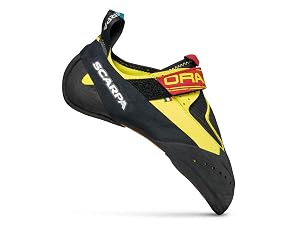 Scarpa Drago
Cliff Culture rating
95
Plastic Grip
64
Session Comfort
58
Gym Value
Downturn
Aggressive
Price
$228.95
Stiffness
Soft
Standout Feature
SRT toe wrap
Prices checked 11 Sep 2026
Pros & cons
Gym boulderers who rely on smears, toe hooks, and steep volumes get the best plastic grip here, at a cost in price and support.
Pros
- Grips rounded volumes and sloping plastic well
- Large toe wrap feels secure on deep hooks
- Supple upper molds quickly around the foot
Cons
- Minimal support can tire the feet on long sessions
- Soft rubber wears faster than stiffer compounds
Steep-wall grip
The Drago uses a soft forefoot with M50 rubber wrapping over the toe, letting the shoe conform closely to volumes and rounded holds. Reviews consistently rate it highly for steep gym bouldering and sloping footholds. Its slim heel also works well on smaller heel placements.
Break-in and fit
Break-in is short, and reviewers report that the supple upper molds to the foot quickly. The mesh can bunch and pinch over the top of the foot if the strap is pulled too tight. Some climbers find the overall fit restrictive. Loosening the strap between attempts can help during longer sessions.
What it costs to run
At roughly $5 to $7 per rental visit, the Drago takes the longest to pay for itself. It carries the highest price in this group. Its soft rubber also wears faster than a stiff outsole. Scarpa offers resoling, which helps offset some of that long-term cost.
Not the all-round pick
The Drago offers little support, so long slab sessions can fatigue the feet. Reviews consistently frame it as a specialist for steep, gymnastic terrain rather than a do-everything shoe. Climbers who spend a lot of time on tiny edges often prefer something stiffer. At this price, trying on or borrowing a pair before buying makes sense.
As an Amazon Associate, Cliff Culture earns from qualifying purchases at no extra cost to you.
How to choose indoor climbing shoes
Five things matter most for a gym shoe: rental cost, wall style, fit, softness, and how you care for the pair between sessions. Work through them in that order and the shortlist gets much easier to manage.
-
Decide if rental shoes still work
Rental shoes make sense when you are still figuring out whether climbing will become a regular habit. Use them for a few sessions and pay attention to what feels comfortable. Then count how often you climb in a month. Once weekly rental fees start stacking up, owning a pair becomes much easier to justify.
-
Match the shoe to gym walls
Indoor walls use far more volumes, slopers, and comp-style holds than tiny rock edges. Soft, sticky rubber and a flexible sole usually feel better on that kind of terrain because they spread across larger surfaces. A stiff edging shoe can still work indoors, but much of its advantage goes unused on modern gym setting.
-
Size shoes for long gym sessions
A shoe that feels tolerable for 5 minutes can become miserable after two hours. Gym sessions are long, so size with the full session in mind. Half sizes are useful because they let you fine-tune the fit without making a huge jump. Aim for a snug shoe you can still stand and climb in without sharp pain.
-
Choose softness for volumes and comp holds
Soft midsoles bend more easily around large volumes and flat smears. That extra flex helps when the foothold has little edge to stand on. Stiffer shoes make more sense on tiny outdoor features. If most of your climbing happens on comp holds and rounded gym volumes, softer usually feels more useful.
-
Set a care routine between sessions
Gym shoes spend a lot of time trapped in bags, which is where moisture and odor build. Take them out after each session and let them dry fully before packing them away again. If the shoe can be resoled, you can also replace worn rubber instead of replacing the whole pair.
Feature availability
The table below compares 13 features across the five picks. Some are common on gym shoes, while others solve more specific fit or durability problems. Check the standard features first, then look at options such as low-volume sizing, wide lasts, lace versions, and resoling.
Full feature comparison
| Feature | Scarpa Reflex VS | Scarpa Veloce | Scarpa Instinct VSR | Evolv Defy | Scarpa Drago | |
|---|---|---|---|---|---|---|
| Standard features | Sticky Rubber OutsoleSoft rubber compounds conform easily to painted plywood and plastic holds. Gym surfaces provide less texture than outdoor rock, so the rubber compound plays a larger role in grip. | – | – | – | – | – |
| Full Toe Rubber PatchA wide rubber patch over the toe gives you more friction during toe hooks. Modern gym setting uses toe hooks frequently on volumes and steep problems. | – | – | – | – | – | |
| Velcro Closure StrapsOne or two straps make the shoe quick to remove between attempts. That convenience matters in bouldering gyms, where climbers often take their shoes off repeatedly during a session. | – | – | – | – | – | |
| Rubber Heel CupA shaped rubber heel cup helps keep the foot secure during heel hooks on volumes and comp holds. Extra space around the heel makes the shoe more likely to shift under load. | – | – | – | – | – | |
| Soft Flexible MidsoleA soft midsole lets the foot flex around large volumes and flat smears. Stiffer shoes provide better support on tiny edges, which appear less often on modern gym problems. | – | – | – | – | – | |
| Asymmetric Toe BoxAn asymmetric shape directs pressure toward the big toe, helping with precise placements on smaller footholds and steep gym climbing. | – | – | – | – | – | |
| Half Size IncrementsHalf sizes make it easier to fine-tune the fit for long sessions. A full-size jump can be the difference between secure and painfully tight. | – | – | – | – | – | |
| Resolable Sole ConstructionA resolable shoe can have worn outsole rubber replaced before the rest of the shoe is finished. That can extend the useful life of a pair and reduce its long-term cost. | – | – | – | – | – | |
| Add-on features | Low Volume VersionA low-volume last reduces space around the heel and instep for narrow or shallow feet. That closer fit helps prevent movement during hooks. | – | – | – | – | – |
| Wide Fit OptionA wide last gives broad forefeet enough room to fit securely without crushing the toes. This can make a major difference during longer gym sessions. | – | – | – | – | – | |
| Antimicrobial Liner TreatmentA treated liner helps slow the bacteria that contribute to odor. Gym shoes spend a lot of time damp inside closed bags, so moisture control matters. | – | – | – | – | – | |
| Lace Up Version AvailableThe same model is also available with laces. Laces let you adjust pressure across more of the foot, which can help when straps leave gaps around the instep. | – | – | – | – | – | |
| Vegan Synthetic UpperA synthetic upper contains no animal leather and generally stretches less over time. That makes the long-term fit more predictable across repeated gym sessions. | – | – | – | – | – | |
| Feature total | 2out of 13 | 6out of 13 | 8out of 13 | 9out of 13 | 8out of 13 | |
Rent or buy your first pair
Climbing shoe rentals commonly cost around $5 to $7 per visit. If you only climb occasionally, that can still make sense. If you go every week, the total grows quickly. Count your visits over one month, multiply by the rental fee, and compare that with the price of your own pair.
A worn outsole does not always mean the shoe is finished. A half resole costs around $38, while a full resole can run roughly $60 to $110 depending on the shop and repair. That can still cost far less than replacing a shoe you already know fits well.
What soft rubber does on plastic
Modern gym setting relies heavily on volumes, slopers, and large comp holds. Soft rubber and a flexible sole can conform to those shapes and create more contact with the wall. A large toe patch also helps when problems force you into toe hooks. Stiffer outdoor shoes give up some of that feel in exchange for stronger support on small edges.
The specs pointed toward the expensive soft shoes as the obvious gym winners, but the owner reports complicated that picture. The cheapest pair here scored especially well for comfort and value. It only clears a 20-review floor on Amazon, so the sample is still small. Soft rubber gives you excellent grip on plastic but generally wears faster. Compare how often you climb with the cost of a pair, then use our climbing shoe hub guide if you want a broader comparison.
Frequently asked questions
Do you need special shoes for indoor climbing?
You need climbing shoes, but they do not have to be a gym-specific model. Indoor-focused shoes usually use softer, stickier rubber that grips painted plastic, volumes, and slopers well. Most gyms rent climbing shoes for first-time visitors, so you can try the sport before buying a pair.
Is there a difference between indoor and outdoor climbing shoes?
Indoor shoes often favor softer, more flexible rubber for volumes, slopers, and smears. Outdoor shoes tend to use more support for small rock edges and longer routes. Soft gym rubber can still work outside, but owners generally report faster wear on rough rock.
Is it better to rent or buy climbing shoes for the gym?
Renting works well if you climb only a few times a year or are still deciding whether you like the sport. At roughly $5 to $7 per visit, weekly rentals become expensive fairly quickly. Buying starts to make more sense once your accumulated rental fees approach the cost of your own pair.
How tight do indoor climbing shoes need to fit for a gym session?
The shoe needs to feel snug around the heel and toes without causing sharp pain. Size for the full session rather than the first few minutes, because many gym sessions last 2 to 3 hours. A fit that feels secure after an hour is more useful than one that forces you to remove the shoes after every problem.
How long does soft rubber last on gym plastic before a resole?
Soft rubber usually wears faster than a harder compound, especially if you drag your toes or use the same pair outdoors. There is no fixed number of sessions because footwork and climbing frequency matter a lot. A resolable shoe lets you replace worn rubber before damage reaches the rest of the shoe.
Our methodology OpenClose
Each score in this guide comes from published product specs, expert reviews such as OutdoorGearLab, and anonymized owner reports. We do not base the rankings on a single first-person test session. Three weighted metrics turn that evidence into one score for each pair.
Plastic Grip (40%): Plastic Grip rewards soft, sticky rubber, broad toe coverage, and a sole flexible enough to conform to volumes and smears. Stiff edging platforms score lower because modern gyms use fewer tiny footholds than outdoor rock.
Session Comfort (30%): Session Comfort rewards easy on-and-off closures, low heel pressure, predictable break-in, and positive owner reports from longer sessions. Repeated reports of sharp toe pain or uncomfortable pressure lower the score.
Gym Value (30%): Gym Value compares the shoe price with repeated rental fees of around $5 to $7 per visit. Lower prices, resolable soles, and reports of slow wear raise the score. Expensive shoes with fast toe wear score lower.

About the author
Luc Gonzales
Luc Gonzales writes and fact-checks gear guides for Cliff Culture. He climbs indoors and outdoors and compares product specs, published reviews, and owner reports before ranking a shoe. His recommendations focus on giving climbers a clear reason for each pick rather than relying on brand reputation alone.