
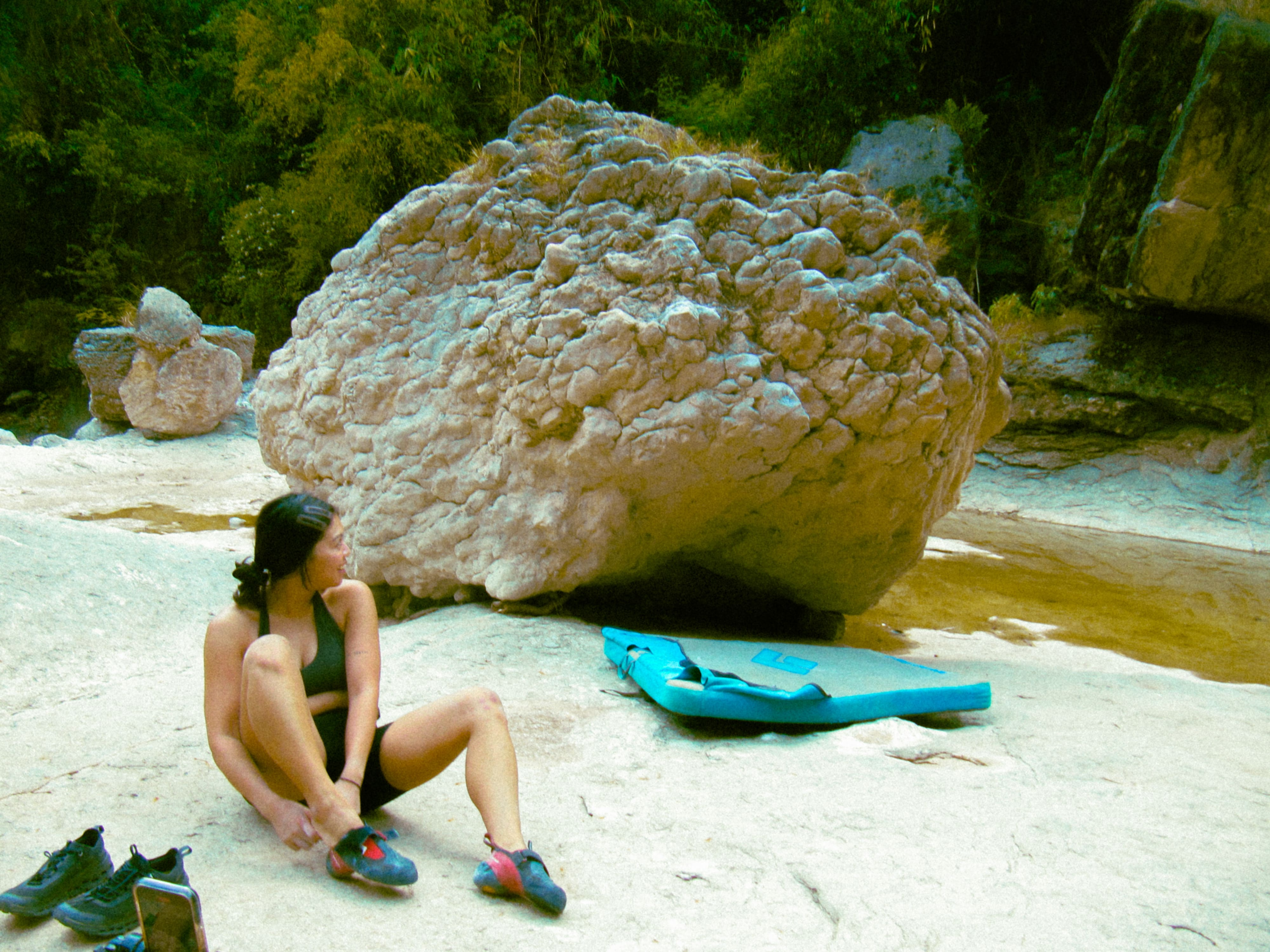

I bought my first ever pair of La Sportiva Miuras, a month into climbing, from a climber with decades of experience. It was painful to climb in, but they assured me that that was how climbing shoes usually felt. If I put those shoes on now, maybe I’d be fine – but, back then, those shoes were agonizing to climb in.
The thing is, he probably wasn’t lying to me.
He’d been climbing for ages at that point, and, back then, it was just common knowledge that you had to go several sizes down for a performance fit. These days, however, that advice seldom holds true. It depends on the brand, but the technology we have today does allow us to either downsize just a few sizes – or not downsize at all. While it was most definitely the norm back then, it’s only a matter of personal preference, now.
Having said that—no amount of breaking in could’ve convinced me to keep those shoes.
They were excruciating.
I immediately sold that pair and bought an oversized La Sportiva Tarantula Boulder – a pair that was much more comfortable and practical for the beginner I was. Since then, I’ve worn out several pairs of climbing shoes, and am much more knowledgeable now about how a climbing shoe should feel.
I wrote this guide so you wouldn’t have to go through what I did. No confusing advice, just clear, objective information on the perfect fit.
What’s in this guide:
- Are climbing shoes supposed to be tight?
- How climbing shoes should feel
- How your experience level affects fit
- How your climbing style affects fit
- How your specific shoe affects fit
- How to Get a Climbing Shoe With the Right Size
- Common Sizing Mistakes to Avoid
- How Climbing Shoe Fit Changes Over Time
- Why you don’t want a shoe that’s too tight
- Frequently Asked Questions
Let’s start with the age-old question:
Are climbing shoes supposed to be tight?
Climbing shoes are meant to fit tight. They create a strong, direct link between your foot and the rock. Regular shoes leave room for your foot to move around, but climbing shoes need to fit like a second skin.
This snug fit matters because it transfers all your energy to the shoe’s tip. When you step on a hold, nothing shifts inside the shoe. You can stand on tiny edges and feel small details in the rock.
Performance fit, explained
A tight fit helps you climb better by giving you more power and sensitivity. When your foot stays locked in place with your toes slightly curled, you can push harder through your big toe. This is key for standing on small footholds.
A secure fit also helps with proprioception—your sense of where your body is in space. A close-fitting shoe without dead space increases a climber’s sensitivity. You can feel the rock’s shape and make small changes to your position. This feedback helps you place your feet precisely and stay balanced on the wall.
What makes a proper performance fit
The main goal of a performance fit is to stop your foot from moving inside the shoe. This turns your foot into a powerful, precise tool for climbing.
A proper fit has three main goals:
- No Heel Lift: Your heel should stay locked in place when you stand on your toes.
- No Dead Space: The shoe should wrap snugly around your foot with no air pockets, especially under the arch or around the sides.
- Snug, Not Painful: The fit should be tight enough to feel slightly uncomfortable, but it shouldn’t cause sharp or severe pain.
These goals help the shoe work like part of your body. When there are no gaps or “dead space,” the shoe feels responsive and steady. You can trust your feet on hard moves because the shoe won’t shift or slip at a crucial moment.
How climbing shoes should feel
A “perfect” climbing shoe fit feels like a firm, secure handshake for your foot. It should be snug everywhere with no empty space, but it shouldn’t create painful pressure points or “hotspots.” Your toes will press against the front of the shoe. They’ll be flat or curled, depending on the shoe’s design.
When you stand up, you’ll feel pressure, especially on your big toe knuckle. The heel should be snug and not slip when you rock onto your toes. You won’t want to walk around in them for hours, but the feeling should be contained power, not torture. The ideal fit is a balance. The belief that climbing shoes must be painful to be effective is a common myth.
Pain level
Your climbing shoes should not cause sharp or unbearable pain when you first put them on. There’s a difference between performance-level discomfort and actual pain. A well-fitted shoe will feel noticeably tight and a bit uncomfortable, especially if you’re new to climbing shoes.
However, sharp pinching, intense cramping, or a burning feeling means the shoe is likely too small or the wrong shape for your foot. The “no pain, no gain” rule doesn’t apply here. A shoe that hurts too much will stop you from climbing well and can injure your feet over time.
Toe curl
For a performance fit, your toes should curl inside the shoe to create a powerful, arched position. This engages your foot muscles and focuses energy into your big toe. That’s essential for standing on small edges. Your toe knuckles should push up against the top of the shoe.
But this curl should be powerful, not painful. In a correctly fitted shoe, your toes should be curled, but not scrunched painfully or stacked on top of each other. If your toes are folded over or feel crushed, the shoe is too small or too aggressive for your foot shape.
Toe slop
You should not be able to wiggle your toes freely inside a properly fitted climbing shoe. Any major movement or “slop” means the shoe is too big. This will cut your power and precision on the wall.
A tiny bit of flex is normal, but your toes should feel engaged and ready to push. If you can fully extend or spread your toes, you’ll lose the ability to focus force onto a small point. Limited wiggle room shows that the shoe will perform as intended.
Dead space
Dead space is any air pocket between your foot and the shoe. You find it by feeling for looseness. The most common spots are under the arch, above the toes, and around the heel. Press on these areas to see if the material gives way easily.
To test the heel, stand on your tiptoes. The heel should fit snugly with little lift and shouldn’t painfully pinch your Achilles tendon. If you feel a big gap or your heel pulls out, there’s too much dead space. To fix this, find a shoe with a different shape or volume that matches your foot better.
Sign up to our newsletter!
Get stories, tips, and community updates from Cliff Culture delivered to your inbox. Enter your email to sign up.
Your message has been sent

By submitting your information, you`re giving us permission to email you. You may unsubscribe at any time.
Start with comfort, then work your way up.
The ideal tightness of your climbing shoe changes as you grow from beginner to advanced climber. Your first pair should focus on comfort to help you learn movement. Later pairs will trade comfort for a tighter, more aggressive fit that boosts performance.
The ideal tightness depends on the type of climbing, your experience level, and the shoe’s design. As you gain experience, your feet will get used to the snug fit. Your climbing will demand more precision, which naturally leads you toward tighter, more specialized shoes.
Beginner Climbers
A beginner’s first pair of climbing shoes should focus on comfort for longer sessions at the gym or crag. The fit should be snug, with your toes touching the end of the shoe, but not painfully curled. A flatter, “neutral” shoe profile works best.
New climbers need to learn basic techniques and build foot strength. An overly tight or aggressive shoe will only cause pain and distraction. You should be able to wear your first pair for 30-60 minutes at a time without urgently needing to take them off between climbs.
Intermediate and Advanced Climbers
Intermediate and advanced climbers need a tighter, more aggressive fit to reach higher climbing grades. At this level, shoes become specialized tools for maximum performance on small holds and steep terrain. The fit is much tighter, with toes noticeably curled for tension and power.
These shoes aren’t meant for comfort and are often removed between climbs. The snug fit stops any foot movement. This gives you instant feedback from the rock and allows for advanced techniques like precise toe hooks and heel hooks.
Your shoes should match your climbing style.
Your main climbing style is one of the biggest factors in how tight your shoes should be. A short, powerful boulder problem has very different demands than a long day of multi-pitch climbing.
Choosing the right fit for your style means picking the right tool for the job. You want performance when you need it and comfort when it counts.
Competition & Indoor Bouldering
This style calls for the absolute tightest fit. Modern gym climbing needs sensitivity for smearing on large volumes and precision for complex toe and heel hooks.
Climbers often choose soft, glove-like shoes sized aggressively to create a powerful, curled toe position. This “performance fit” is worn for just minutes, or even seconds. Shoes typically come off right after an attempt.
Outdoor Bouldering & Steep Sport Climbing
For powerful movement on steep rock, you need an extremely tight and aggressive fit. The goal is to remove all dead space. This creates a rigid platform that channels power from your entire leg through your big toe onto the smallest footholds.
These shoes curve down sharply from heel to toe to help your feet grip overhanging terrain. The fit is punishingly tight and meant only for a single climb or attempt.
Vertical & Slab Sport Climbing
On vertical faces or low-angle slabs, climbing becomes a delicate dance of balance and footwork. Here, edging ability matters more than a severe downturn.
The fit must still be precise and snug. Your foot shouldn’t shift on a tiny edge. However, shoes for this style are often stiffer and slightly flatter. They provide a more supportive platform for standing on small holds without quickly tiring your foot.
Multi-Pitch Climbing
When you plan to be on the wall for hours, comfort becomes the main concern. Whether sport or traditional, a shoe that’s too tight will cause unbearable pain. This hurts both performance and safety.
The ideal multi-pitch fit is snug but fairly relaxed. Your toes should lie flat or in a very slight, natural curl. This lets you climb, belay, and rappel without agonizing foot pain.
Crack Climbing
This specialized style requires a unique approach to fit. The shoe must be snug enough not to slip or bunch when your foot is twisted inside a crack. Yet it also needs to be comfortable enough to handle intense, direct pressure.
A flat, often stiffer, profile is crucial for protecting your foot and letting it slide into tight spots. An aggressively curved or overly tight shoe will be both useless and painful for this technique.
Sign up to our newsletter!
Get stories, tips, and community updates from Cliff Culture delivered to your inbox. Enter your email to sign up.
Your message has been sent
By submitting your information, you`re giving us permission to email you. You may unsubscribe at any time.
The shoe itself matters, too.
Beyond your foot shape and climbing style, the shoe itself has features that strongly affect how you should size it. The materials, profile or shape, and closure system all play a big role in the final fit.
A leather shoe, for example, needs a different sizing approach than a synthetic one because of how it will change over time.
Shoe Material
The shoe’s material is a main factor in sizing because it determines how much the shoe will stretch. Leather and synthetic materials behave very differently after they’re broken in.
- Unlined Leather: These shoes stretch the most. Unlined leather climbing shoes can stretch up to a full shoe size. Size them accordingly—they should feel very tight in the store.
- Lined Leather: A fabric lining reduces stretch, so these shoes will only stretch about a half-size.
- Synthetic: These materials stretch very little, if at all. Synthetic climbing shoes exhibit minimal stretch. The fit you feel in the store is the fit you’ll have for the life of the shoe.
This difference is key when choosing your size. If you size a synthetic shoe as tightly as an unlined leather one, it will likely stay painfully small. But sizing a leather shoe too comfortably in the store will result in a sloppy, imprecise fit after a few weeks of use.
Shoe Profile
A shoe’s profile refers to its shape—specifically how much it curves down from heel to toe. This profile sets the position of your foot and connects directly to the shoe’s intended style and fit.
- Neutral: These shoes have a flat profile, similar to a regular sneaker. They offer the most comfortable, relaxed fit. They’re ideal for beginners and all-day climbs.
- Moderate: With a slight downturn, these shoes balance performance and comfort. They work well across many climbing styles.
- Aggressive: These shoes have a severe downturn that forces the foot into a powerful, curled position. They’re designed for maximum performance on steep terrain but are the least comfortable.
The more aggressive the profile, the tighter and more focused the fit will feel, especially in the toe box. A neutral shoe lets your toes lie flat. An aggressive shoe requires them to curl to fit into the downturned shape.
Closure System
The closure system determines how you tighten the shoe. It affects the final fit by allowing different levels of adjustability. Each system offers a unique mix of precision, convenience, and sensitivity.
- Laces: Offer the most customizable fit. You can adjust tightness along your entire foot to accommodate unique foot shapes and eliminate hotspots.
- Velcro (Hook-and-Loop): Provide excellent convenience for taking shoes on and off quickly. This makes them popular for bouldering and gym climbing.
- Slippers: Have no closure system. They rely on an elastic upper for a snug, sensitive fit. They offer the best feel for the rock but the least adjustability.
Laces work well for climbers who need a very specific fit, like those with narrow heels or wide forefeet. Velcro and slippers suit climbers with standard-volume feet who value convenience and frequently remove their shoes between climbs.
Men’s vs. Women’s Climbing Shoe Fit
Men’s and women’s climbing shoes are built on different “lasts” (the 3D molds that give a shoe its shape). This means they’re not just different in color. They have distinct fit characteristics designed for anatomical differences.
Generally, women’s models have a lower overall volume, a narrower heel, and a smaller toe box. However, the best shoe for you is the one that fits your foot’s unique shape, regardless of its gender label. Many men with low-volume feet find a better fit in women’s shoes. Many women with wider feet prefer men’s models.
How to Get a Climbing Shoe With the Right Size
Properly trying on and sizing climbing shoes is a hands-on process that requires patience. Every brand and model fits differently, so you can’t rely on your street shoe size. The goal is to feel how the shoe interacts with your foot on actual climbing holds.
Following a consistent process in a gear shop will help you compare different models and make an informed decision. Small details, like the time of day you try them on, can make a big difference in finding the perfect fit.
To get the most accurate fit when trying on shoes, follow these steps. The most important rule is to test the shoes on a small climbing wall or bouldering cave, which most gear shops have.
- Shop in the afternoon. Try on climbing shoes in the afternoon because feet can swell up to a full size during the day. This gives you a more realistic sense of the fit.
- Use thin socks or go barefoot, depending on how you plan to climb.
- Put the shoe on and make sure your heel is seated firmly in the back.
- Tighten the closure system to feel the final fit.
- Stand up on the floor to feel the pressure with your body weight.
- Test the shoes on a climbing wall. Stand on small edges, test the heel, and check for any painful hotspots.
This process gives you a much better sense of performance than walking around on a flat floor. Pay close attention to how your heel feels when you stand on your toes. Notice whether your foot shifts inside the shoe when you move side-to-side on a foothold.
How much should you size down from your street shoe size?
There’s no universal rule for sizing down from your street shoe size. Many climbers end up with shoes that are a half-size to two full sizes smaller than their regular shoes. But this varies widely between brands. One brand’s size 9 might fit like another brand’s size 10.5.
Because of this inconsistency, ignore the number on the box and focus purely on the fit. Try on different climbing shoe brands, as every brand uses its own sizing charts and builds shoes on different “lasts.” Your street shoe size is only a rough starting point for the first pair you try.
Sign up to our newsletter!
Get stories, tips, and community updates from Cliff Culture delivered to your inbox. Enter your email to sign up.
Your message has been sent
By submitting your information, you`re giving us permission to email you. You may unsubscribe at any time.
Common Sizing Mistakes to Avoid
Finding the right climbing shoe size can be tricky. Knowing these pitfalls can save you pain, frustration, and wasted money.
- Buying shoes that are excruciatingly painful. Performance discomfort is normal; agony is not.
- Forgetting about foot swell. Trying on shoes first thing in the morning can lead to a fit that’s too tight later in the day.
- Only trying on one brand. Every brand has a different shape, and your foot may be better suited to one you’ve never tried.
- Not testing them on a wall. You can’t feel heel lift or pressure points on a flat floor.
- Sizing for your street shoes. Leave your regular shoes, like your favorite approach shoes, at the door. Focus only on the fit of the climbing shoe.
The biggest mistake is rushing the process. Take your time, try on at least three to four different models, and listen to your feet. A knowledgeable staff member at a gear shop can provide valuable guidance, but you’re the final judge of what feels right.
How Climbing Shoe Fit Changes Over Time
A climbing shoe’s fit isn’t fixed—it changes as you wear it. The materials stretch and mold to your foot’s unique shape during the break-in period. External factors like resoling and washing can also change how the shoe feels.
The Break-In Period and Shoe Stretch
A new shoe’s fit changes most during its break-in period. As you climb, heat and pressure from your foot cause the shoe’s materials to stretch and mold. This creates a more personalized fit. The amount of stretch depends entirely on the material.
Unlined leather shoes can stretch up to a full size, so buy them very tight. Synthetic shoes hardly stretch at all. For help with this process, check out methods for how to break in climbing shoes.
Does resoling your climbing shoes change the fit?
Yes, resoling your climbing shoes can temporarily change the fit. When a cobbler adds new rubber to the sole, it adds tension back into the shoe. This often makes it feel tighter and stiffer than before the resole.
This “new shoe” feeling is normal and usually goes away after a few climbing sessions as the new rubber breaks in. The shoe’s upper hasn’t changed, but the restored structure and fresh edges can make it feel noticeably smaller at first.
Will washing your climbing shoes change the fit?
Washing your climbing shoes can make them feel tighter, but this effect is usually temporary. When materials like leather get wet and then dry, they tend to shrink slightly. This can result in a snugger fit for a session or two.
However, the shoe will almost always stretch back to its broken-in size with a little use. To avoid damaging the glue and materials, always wash by hand with a mild soap. Let them air dry away from direct sunlight or heat.
Why you don’t want a shoe that’s too tight
A tight fit is essential for performance, but there’s a clear line between “performance tight” and “dangerously tight.” Wearing climbing shoes that are too small can ruin your enjoyment of the sport. It can also cause short-term and long-term foot health problems.
Recognizing the risks and protecting your feet is crucial. No climb is worth permanent damage. Finding a shoe that performs well without being destructive is key to a long and healthy climbing career.
Short-term risks
Wearing climbing shoes that are too tight can cause immediate, painful problems that cut a climbing day short. These issues clearly signal that your shoes are the wrong size.
The most common short-term risks include:
- Intense Pain: Sharp, cramping, or burning feelings that make it hard to put weight on your feet.
- Blisters and Hotspots: Friction and pressure points can quickly cause painful blisters, especially around the heel and toes.
- Bruised Toenails: Constant, excessive pressure on the front of the shoe can bruise toenails or even cause you to lose one.
These problems cause discomfort and prevent you from climbing with proper technique. When your feet hurt, you become hesitant and less precise. This ultimately hurts your progress and enjoyment.
Long-term risks
Consistently climbing in shoes that are far too small can lead to chronic and sometimes permanent foot damage. The unnatural position and extreme pressure can change your foot structure over many years.
Chronically wearing overly tight climbing shoes can lead to long-term foot problems. These include pain, changes in toe shape like bunions, and stiffness in the big toe joint. Other potential issues include hammertoes, nerve damage (neuromas), and toenail deformities. Protecting your feet with a proper fit is an investment in your climbing longevity.
Ready to Find Your Perfect Fit?
Finding the right climbing shoe fit means balancing performance with practicality. The perfect shoe isn’t the tightest one you can possibly wear. It’s the one that helps you climb your best without causing unnecessary pain or injury. Remember that the ideal fit depends on your experience level, your climbing style, and the specific features of the shoe.
Head to your local gear shop in the afternoon. Try on a wide variety of brands and models, and don’t be afraid to spend time testing them on a store wall.
Learn More About Climbing Gear


Frequently Asked Questions
Why do climbing shoes need to be so tight?
Climbing shoes are designed to be tight to stop any movement of your foot inside the shoe. This creates a solid connection to the rock. It transfers all your power directly to the foothold and increases sensitivity for precise footwork.
Should my climbing shoes be painful?
No, your climbing shoes should not be painful. A proper fit will feel snug and slightly uncomfortable, like a firm handshake. But it shouldn’t cause sharp, pinching, or unbearable pain. Agony is a sign the shoe is too small or the wrong shape for your foot.
How should my toes feel in a well-fitted climbing shoe?
In a performance fit, your toes should press against the front of the shoe in a slightly curled, powerful position. You shouldn’t be able to wiggle them freely. For beginners, toes can be closer to flat, but they should still touch the end of the shoe with no dead space.
How does my experience level affect how tight my shoes should be?
Beginners should focus on comfort with a snug but not painfully curled fit. This helps you learn basic climbing technique. Intermediate and advanced climbers will choose a much tighter, more aggressive fit for maximum performance and power on difficult routes and higher climbing grades.
Do I need different shoes for bouldering versus multi-pitch climbing?
Yes, the ideal fit differs by type of climbing. Bouldering and sport climbing require a very tight, aggressive fit for maximum power on short, difficult problems. For long multi-pitch or trad climbs, comfort matters more. A flatter, more relaxed fit is recommended to avoid pain over many hours.
How much should I size down from my street shoe size?
There’s no universal rule for sizing down since sizing varies dramatically between brands. Ignore the number on the box and focus on the actual fit. Try on several different brands and avoid sizing based on your other footwear, like approach shoes.
What is “dead space” and how do I avoid it?
Dead space is any air pocket between your foot and the shoe. It’s typically found under the arch or around the heel. Check for it by pressing on these areas or by seeing if your heel lifts when you stand on your toes. To avoid it, find a shoe model with a shape and volume that better matches your foot.
Does it matter if I buy leather or synthetic climbing shoes?
Yes, the material is crucial for sizing. Unlined leather shoes can stretch up to a full size, so buy them very tight. Synthetic shoes stretch very little. The fit you get in the store is what you’ll have for the shoe’s lifetime. Knowing how much a shoe will stretch is key after you break in climbing shoes.